
Showing posts with label ww2. Show all posts
Showing posts with label ww2. Show all posts
Sunday, 2 December 2012

Friday, 16 November 2012

Tuesday, 26 June 2012
revell stalingrad
 03189 Stalingrad Battle Pzkpfw. III & T-34 & Figures
- Includes diorama showing features of the terrain
- Pz.Kpfw. III, Type L
- T-34/85
- 45 German infantrymen with extensive equipment
- 48 Soviet infantrymen with extensive equipment
- Structures with highly detailed surfaces
- Injection moulded tracks with individual links and segments
- Rotating turret
- Detailed drive wheels and track rollers
Decals for two versions of each tank:
- "111", 16. Pz.-Div., Stalingrad, Winter 1942-43
- "14", Pz.Rgt.2, 16. Pz.-Div., Stalingrad, Autumm 1942
- "17", unknown unit, Red Army, Stalingrad, Winter 1942-43
- "For Stalin", unknown unit, Red Army, Stalingrad, Autumm 1942
Stalingrad on the Volga was of great strategic and ideological significance. The battles for this important industrial area began in the summer of 1942 with an onslaught by about 250,000 German soldiers. In November, when the city had been almost completely taken, incurring heavy losses, the Red Army succeeded in kettling the German Army in a large encirclement of the city. The Soviet units retook large parts of the kettle and then the house by house battle began in the ruined city. Finally, on 02.02.1943, the northern part of the kettle capitulated. They had already started taking prisoners in the southern part on 31.01.1943. The annihilation of the German 6th Army in Stalingrad is regarded as the turning point of the war. On the German side the Pz.Kpfw. III was used in large numbers. From 1940 this vehicle formed the backbone of the German tank units. With its long 50 mm L/60 cannon it could combat a T-34 head on from a distance of 500 m. The Soviet T-34 started as an armoured vehicle with a well-balanced combination of artillery, armour and mobility. With its 76.2 mm L/41 cannon it could combat a Panzer III tank from a distance of 1,000 m.
Sunday, 22 April 2012

Sunday, 25 March 2012
The last days of the S.S
The 1st SS Division Leibstandarte SS Adolf Hitler ended its days fighting in Berlin. On 23 April 1945, Hitler appointed Brigadeführer Mohnke the battle commander for the centre government district (Zitadelle sector) that included the Reich Chancellery and Führerbunker.
  Mohnke's command post was under the Reich Chancellery in the bunkers therein. He formed
Kampfgruppe Mohnke (Battle Group Mohnke) which was divided into two weak regiments made up of approximately 2,000 men. The core group of his fighting men were the 800 of the Leibstandarte (LSSAH) Guard Battalion (assigned to guard the fuhrer).
After Hitler's suicide, they received orders to break out. Prior to the breakout, Mohnke briefed all commanders (who could be reached) within the Zitadelle sector about the events as to Hitler's death and the planned breakout.
The breakout started at 2300 hours on 1 May. It was a "fateful moment" for Brigadeführer Mohnke as he made his way out of the Reich Chancellery. He had been the first duty officer of the LSSAH at the building and now was leaving as the last battle commander there. He led the first of ten main groups and attempted to head northwest towards Mecklenburg.Several very small groups managed to reach the Americans at the Elbe's west bank, but most including Mohnke's group could not make it through the Soviet rings. Many were taken prisoner and some committed suicide. On 2 May hostilities officially ended by order of Helmuth Weidling, Commandant of the Berlin Defense Area.
After Vienna was captured, the bulk of the division surrendered to U.S. forces in the Steyr area on 8 May 1945. The demarcation line between the Soviets and U.S. troops was Enns.
 Therefore, the roads to Enns were jammed with civilians and soldiers as they hurried to get to the west before 0100 hours on 9 May when the bridges over the river would be blocked. For the men of the LSSAH who made it west, they were marched off to different Prisoner of War camps. Most of the men went to the Ebensee camps for captivity
 and Führerbunker.
 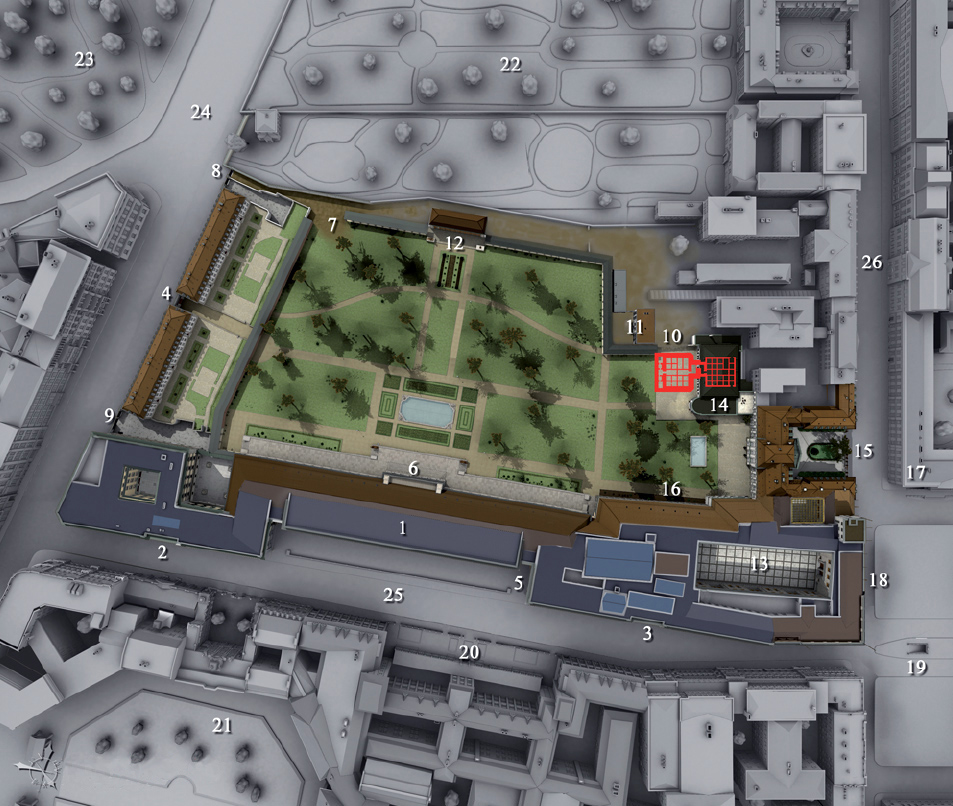 Mohnke's command post was under the Reich Chancellery in the bunkers therein. He formed
 Kampfgruppe Mohnke (Battle Group Mohnke) which was divided into two weak regiments made up of approximately 2,000 men. The core group of his fighting men were the 800 of the Leibstandarte (LSSAH) Guard Battalion (assigned to guard the fuhrer).
After Hitler's suicide, they received orders to break out. Prior to the breakout, Mohnke briefed all commanders (who could be reached) within the Zitadelle sector about the events as to Hitler's death and the planned breakout.
The breakout started at 2300 hours on 1 May. It was a "fateful moment" for Brigadeführer Mohnke as he made his way out of the Reich Chancellery. He had been the first duty officer of the LSSAH at the building and now was leaving as the last
battle commander there. He led the first of ten main groups and attempted to head northwest towards Mecklenburg.Several very small groups managed to reach the Americans at the Elbe's west bank, but most including Mohnke's group could not make it through the Soviet rings. Many were taken prisoner and some committed suicide. On 2 May hostilities officially ended by order of Helmuth Weidling, Commandant of the Berlin Defense Area.After Vienna was captured, the bulk of the division surrendered to U.S. forces in the Steyr
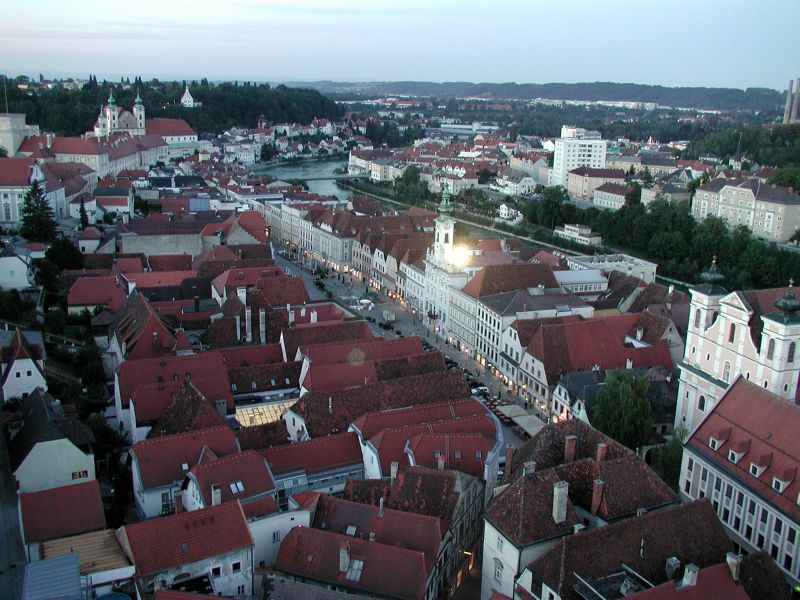 area on 8 May 1945. The demarcation line between the Soviets and U.S. troops was Enns.
 Therefore, the roads to Enns were jammed with civilians and soldiers as they hurried to get to the west before 0100 hours on 9 May when the bridges over the river would be blocked. For the men of the LSSAH who made it west, they were marched off to different Prisoner of War camps. Most of the men went to the Ebensee camps for captivity
Tuesday, 31 January 2012

Tuesday, 13 December 2011

Monday, 26 September 2011
new revell 1-72 normandy british
 On 6th June 1944 the Allies landed in Normandy under Operation Overlord. This included British infantry regiments. They forced the defenders out of landing zones Juno, Sword and Gold and in the following days and weeks broke the resistance of the Germans at Quistreham, Arromanches and Caen.Revell now have these new troops representing the event.
Tuesday, 6 September 2011
war in the desert
 Rommel was born in 1891 in Heidenheim. During World War One, he distinguished himself in the German Third Army and he was decorated for his bravery and leadership. After the war, Rommel remained as an infantry officer and instructor. brigade
 His chance for real military power came when Hitler, appointed chancellor in 1933, recognised his ability. By 1938, Rommel was a senior military figure in the Wehrmacht. His success in the campaigns of 1939
  and especially the successful attack on Western Europe in 1940, lead to Hitler appointing him commander of the Afrika Corps in 1941. It was in the deserts of North Africa that Rommel found real success.
The nickname ‘Desert Fox’ was well deserved. Rommel was highly respected even by the British. Auchinleck, Rommel’s opposite until his sacking by Churchill, sent a memo to his senior commanders in North Africa, to state that it was their responsibility to ensure that their men thought less of Rommel as a ‘super military leader’ and more of him as a normal German commander.Rommel’s fame in the desert rests on his success as a leader and also his uncompromising belief that all prisoners of war should be well looked after and not abused. One story told at the time was that Italian troops took from British POWs’ their watches and other valuables. When Rommel found out, he ordered that they be returned to their owners immediately. To many British ‘Desert Rats’, Rommel epitomised a gentleman’s approach to a deadly issue – war.
 Rommel knew that his options at the vital battles at El Alamein were limited. Montgomery, who succeeded the dismissedAuchinleck, had the advantage of Bletchley Park feeding him the battle plan Rommel was going to use. Rommel was also seriously starved of the fuel he needed for his attack on Montgomery’s ‘Desert Rats’.
  The second battle at El Alamein was a very fluid battle but the sheer weight of supplies that Montgomery had access to (amongst other equipment were 300 new Sherman tanks) meant defeat for Rommel.
  The defeat of the Afrika Corps was the first major setback for Hitler and the Wehrmacht. Hitler ordered Rommel to fight to the last man and the last bullet. Rommel had far too much respect for his men to obey this command and retreated. The Germans left North Africa in May 1943. Despite this refusal to obey Hitler’s command, Rommel did not lose favour with Hitler.
to state that it was their responsibility to ensure that their men thought less of Rommel as a ‘super military leader’ and more of him as a normal German commander.Rommel’s fame in the desert rests on his success as a leader and also his uncompromising belief that all prisoners of war should be well looked after and not abused. One story told at the time was that Italian troops took from British POWs’ their watches and other valuables. When Rommel found out, he ordered that they be returned to their owners immediately. To many British ‘Desert Rats’, Rommel epitomised a gentleman’s approach to a deadly issue – war.Rommel knew that his options at the vital battles at El Alamein were limited. Montgomery, who succeeded the dismissedAuchinleck, had the advantage of Bletchley Park feeding him the battle plan Rommel was going to use. Rommel was also seriously starved of the fuel he needed for his attack on Montgomery’s ‘Desert Rats’. The second battle at El Alamein was a very fluid battle but the sheer weight of supplies that Montgomery had access to (amongst other equipment were 300 new Sherman tanks) meant defeat for Rommel. The defeat of the Afrika Corps was the first major setback for Hitler and the Wehrmacht. Hitler ordered Rommel to fight to the last man and the last bullet. Rommel had far too much respect for his men to obey this command and retreated. The Germans left North Africa in May 1943. Despite this refusal to obey Hitler’s command, Rommel did not lose favour with Hitler.In February 1944, Rommel was appointed by Hitler to be commander of the defences of the Atlantic Wall. Rommel’s brief was to ensure that Western Europe was impregnable.

He took full responsibility for the Northern French coastline.

The beaches at Normandy were littered with his anti-tank traps which were invisible at full-tide.
As it was, the planning at D-Day meant that Rommel’s defences were of little problem to the vast Allied attack. At the time of D-Day, Rommel commanded the important Army Group B. black tree
As it was, the planning at D-Day meant that Rommel’s defences were of little problem to the vast Allied attack. At the time of D-Day, Rommel commanded the important Army Group B. black tree

On July 17th 1944, Rommel was wounded in an attack on his car by Allied fighter planes. The attack took place near St. Lo. artizan

Rommel was implicated in the July 1944 Bomb Plot against Hitler and the Gestapo was keen to interview this famous military commander. Hitler was keen to avoid the public show trial of his most famous general and it seems that a 'deal’ was done. Rommel died ‘of his wounds’ on October 14th 1944. He was given a state funeral. But it seems that he committed suicide to a) save himself from a humiliating show trial and b) it seems that Hitler promised that his family would not be punished for Rommel’s indiscretions if he died ‘of his wounds’. battle honours

What impact Rommel would have had on the Allies drive to Germany after D-Day is difficult to speculate. However, the sheer odds against the Wehrmacht and Luftwaffe post-June 1944 were such that this famous commander would have been unable to hinder the Allies progress.
chiltern
 An M3 Lee tank, commanded by U.S. Army Sergeant First Class Joe Gunn (Humphrey Bogart) and nicknamed Lulu Belle, becomes separated from its unit during a general retreat from Rommel's forces. At a bombed-out field hospital, the crew picks up a motley collection of stragglers, among them a British doctor, four assorted Commonwealth troops, and a Free French corporal (Louis Mercier). Later, they pick up a Sudanese sergeant major (Rex Ingram) and his Italian prisoner (J. Carrol Naish), who volunteeers to lead them to a well at Hassan Barani. En route, a Luftwaffe pilot (Kurt Kreuger) strafes the tank, killing one of the British soldiers (Lloyd Bridges), but is shot down and captured. Arriving at the well, they find it completely dry.
Now running out of water, they are forced to detour to a desert well marked on Gunn's map. They find it, but it is almost empty, providing only a trickle of water. A German half track arrives soon afterwards and Gunn's group ambushes it. Gunn finds out from the two survivors of its crew that a German battalion, desperate for water, is following close behind. He decides to make a stand to delay the Germans any way he can, while he sends one of his men, Waco (Bruce Bennett) away in the captured German vehicle in search of help. The two Germans are released, to carry back an offer: "food for water", even though there is barely enough for Gunn's men. Gunn then changes the deal to "guns for water".

The well has completely dried up by the time the Germans arrive. A standoff and battle of wills begins. Gunn pretends the well is full of water and negotiates to waste time. Eventually, the Germans attack and are beaten off again and again, but one by one, the defenders are killed.
 However, the thirst-maddened Germans' final assault turns into a full-blown surrender as they drop their weapons and claw across the sand towards the well.
  To Gunn's shock, he discovers that a German shell that exploded in the well has refilled it by tapping into another source of water.
  Gunn and the only other Allied survivor disarm the Germans while they're drinking their fill and start marching them east, where they encounter Allied troops led by Gunn's courier Waco,
 who had managed to reach them. The movie ends with news of the allied victory at the First Battle of El Alamein, turning back the tide of Rommel's Afrika Corps.
Sunday, 21 August 2011
corgi
Marmaduke St. John Pattle (nicknamed 'Pat') was born in South Africa in 1914 and joined the RAF in 1936. He was posted to 80 Squadron, which had just been equipped with Gloster Gladiators. 'Pat' Pattle was to fast become the leading Gladiator ace, with fifteen and a half victories of his total of thirty-four confirmed. L8011, YK-0 was the regular Gladiator flown by Pattle in the pre-war years and through most of the spring and early summer of 1940, serving in Egypt.
On one occasion following an engine failure it bounced off the desert surface losing one wheel in the process. Pattle managed to restart the engine and land the aircraft back at the airfield without causing any further damage. It remained with the Squadron throughout the fighting in the summer of 1940 and Pattle may well have scored some of his victories with it. It went to Greece with the Squadron but was transferred to the Royal Hellenic Air Force on 2nd December 1940.

Monday, 11 July 2011


Wednesday, 22 June 2011


Sunday, 19 June 2011


Friday, 3 June 2011
THE BATTLE OF PORTA LAME

partizans by skytrex 20mm
The battle of Porta Lame constitutes a significant episode in the context of the Italian resistance movement and is one of the most important battles that took place in an urban centre in Italy in that period.

20mm irregular
It was fought on 7 November 1944 near Porta Lame in Bologna and was engaged by a contingent from detachments of 7th GAP and the other forces of the Italian Social Republic and Germany. Despite the superiority of the latter, the partisans managed to escape the encirclement of their progressive stations causing numerous losses among the ranks
 dixon
dixonThe situation in the autumn of 1944, allied forces which were advancing laboriously up the peninsula faced the German armies on the Gothic line in the Appennino tosco-emilian mountains. Resistance forces present in the urban centers of the territories occupied by German troops, encouraged by the recent successes of the Anglo-American army that summer had managed to force themselves into more points of the enemy's fortified positions, preparing real actions of armed uprising in support of the imminent breaktrough. The province of Bologna, in particular, had already been partially reconquered, the city itself seemed now next its release. 0preiser 1.72
0preiser 1.72 In view of the impressive action in the mountains detachments of the 7th GAP had installed two bases, the main (230 units), led by Giovanni Martini "Paul" with Ferruccio Magnani "Giacomo" Political Commissar, in the basement of the hospital destroyed by Allied bombing, and a second led by Bruno Gualandi "Aldo" with Lino Michelini  "William" Political Commissar. (75 units) in a stable at Slaughter lane near the former river port city. 6 and 15 of November 7, there was a calamity, the position was discovered (the base of the Slaughter lane) by the Germans,and so began the first phase of the battle. The German forces rose in a coordinated plan of attack, and narrowing the scope of action for the partizans, also intensifying the pressure by using weapons such as mortars, 88 mm's. Late in the afternoon even a Tiger tank that was working in the nearby front.
"William" Political Commissar. (75 units) in a stable at Slaughter lane near the former river port city. 6 and 15 of November 7, there was a calamity, the position was discovered (the base of the Slaughter lane) by the Germans,and so began the first phase of the battle. The German forces rose in a coordinated plan of attack, and narrowing the scope of action for the partizans, also intensifying the pressure by using weapons such as mortars, 88 mm's. Late in the afternoon even a Tiger tank that was working in the nearby front.When, after more than ten hours of fighting German troops occupied the premises of strategic buildings, these had already been evacuated, and the germans lost their tracks due to the abundant use of smoke.
At the same time began the second phase of the battle, when the partizans settled among the ruins of the ospedale Maggiore, following the guidelines of a tactical plan prepared to this end, but were quickly surrounded the enemy forces . The rapidity of simultaneous attack not allowed any reaction ordered by German troops. At the end of the day the fallen was 11 deaths among the Republican, 2 Germans, 13 members of the partisan formations and 1 civilian.
the importance and significance of the battle are such as to make you feel one of the most significant among those fought within large urban centres in Europe during World War II.
However, in the days following the clash, the possibility of a joint action between the partisan forces and Allied was destined not to materialize: on 13 November 1944 British General Harold Alexander with a proclamation declaring that the offensive on the Gothic line was temporarily sold out. 
As a result of the non insurrection occurred several episodes of reprisals against partisans: infiltration of police officers and some people, as well as the discovery of other bases , resulted in numerous casualties among the departments of the GAP.
As a result of the non insurrection occurred several episodes of reprisals against partisans: infiltration of police officers and some people, as well as the discovery of other bases , resulted in numerous casualties among the departments of the GAP.
The advance through the Po Valley suffered a setback which would last until the spring of 1945, when, under the impetus of the offensive.Churchill said that all partizan action had no bearing on gthe out come of the war and so we can say that a lot of innocent people were killed for no real gain
Subscribe to:
Posts (Atom)